Guide
How to become an actor in India without moving to Mumbai
You don't need to be in Andheri to get auditions. Here's what actually works if you're starting from any city.
There's a version of the story that every aspiring actor in India has heard. Pack a bag, take a train to Mumbai, show up at Aram Nagar, wait outside casting offices, and eventually someone will see your talent. It's a romantic idea. It's also a terrible plan in 2026.
The industry changed. The way actors get found, auditioned, and cast looks completely different than it did five years ago. And if you understand how, you can build a career from wherever you are right now.
The Mumbai myth
Let me be clear: Mumbai still matters. It's still where the biggest Hindi productions are based, where the major casting directors have offices, and where a lot of deals happen over cutting chai in Versova. If your goal is to be in big-budget Hindi films, you'll probably need to be there at some point.
But "at some point" is not "right now." And Mumbai is not the only city making films.
Hyderabad has become a production hub that rivals Mumbai in output. The Telugu industry alone produces more films per year than Bollywood. Chennai has always been its own world, with Tamil cinema growing its international audience every year. Kolkata's Bengali film industry is seeing a new wave of directors who cast fresh faces. Bangalore has a growing Kannada film scene plus a massive short film community. Pune has theater roots that feed directly into Marathi cinema and Hindi OTT.
If you live in any of these cities, there's work near you. The question is whether you know how to find it.
How OTT changed who gets cast
Before streaming platforms, the path was narrow. You needed to be in Mumbai, get past gatekeepers, and fit a very specific look that mainstream Hindi cinema favored. Regional actors stayed in regional industries. Newcomers without connections waited years for a break.
Then came Netflix, Amazon, Hotstar, Zee5, SonyLIV, and a dozen others. The volume of content exploded. A single platform might release thirty to forty original series in a year. Each series has twenty to fifty speaking roles. That's a thousand new characters that need to be filled, and they can't all be filled by the same pool of actors in Andheri West.
Casting directors started looking wider. They started using self-tapes so they could audition actors from anywhere. A casting team in Mumbai working on a show set in Lucknow actively wants actors who look and sound like they're from Lucknow. If you're in Lucknow, that's an advantage, not a disadvantage.
Regional language content on these platforms also grew. OTT shows in Tamil, Telugu, Malayalam, Kannada, Bengali, and Marathi are being watched nationally and internationally. The budgets are real. The roles are well-written. The audience is there.
Start where you are
Here's a practical path that doesn't require a train ticket.
Get trained locally. Every major Indian city has theater groups. Kolkata has groups like Nandikar and Rangakarmee with decades of history. Chennai has The Hindu Theatre Fest pulling in talent every year. Bangalore has Ranga Shankara. Pune has theaters running Marathi productions year-round. Hyderabad has a growing English and Telugu theater scene.
Theater does something that no workshop or YouTube tutorial can do. It puts you in front of a live audience, forces you to work with other actors, and gives you a director's feedback in real time. It also gets your name into local creative circles, which is where early opportunities come from.
If there's no theater scene near you, look for acting classes that run scene study workshops. Avoid anything that promises "a direct entry into Bollywood." That's a scam, always.
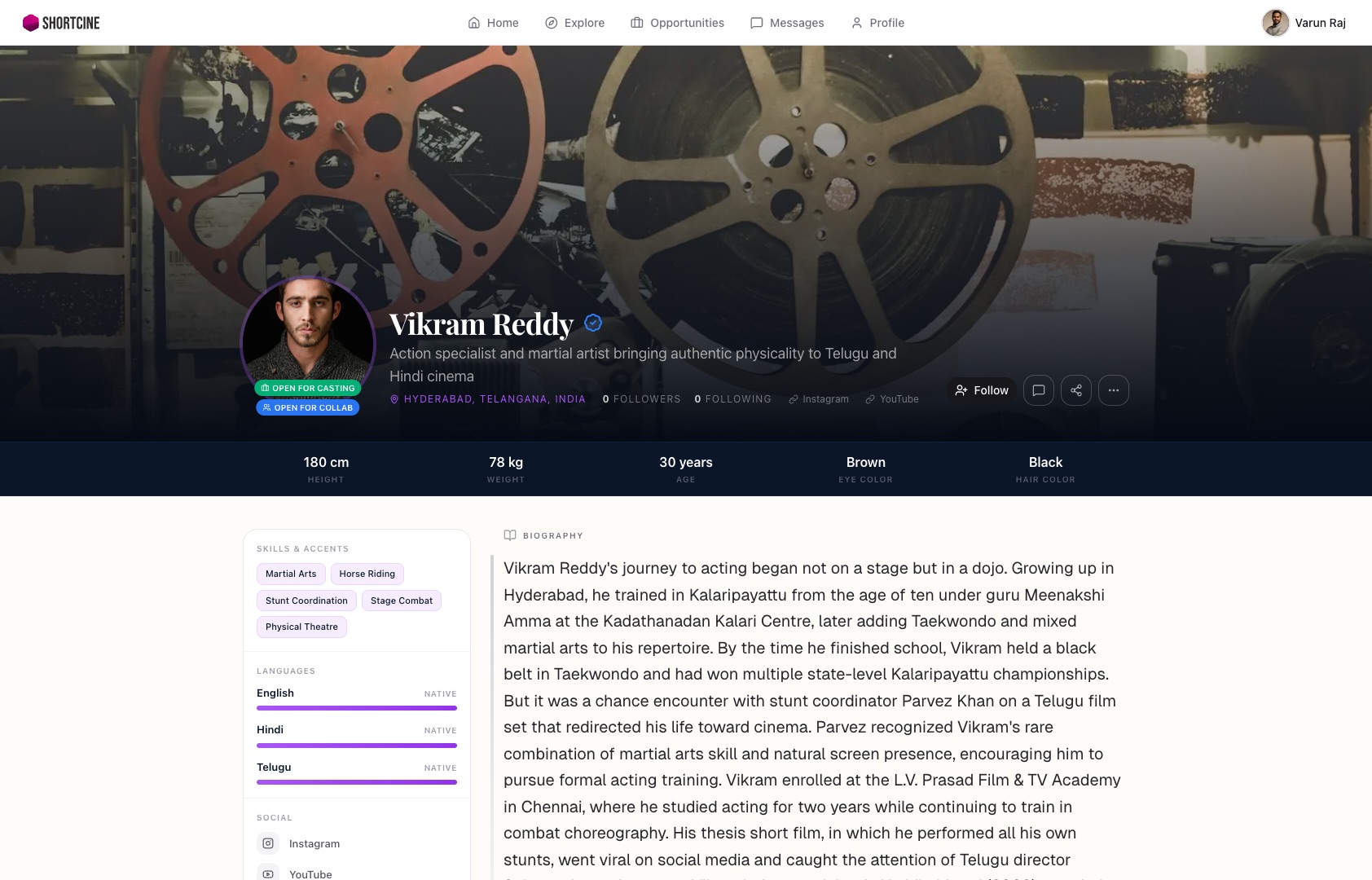
Build a profile online. Create a proper casting profile. Have good photos taken. Record a reel. List your details: height, age, languages, location. Put it all in one place that you can share with a single link. When an opportunity comes, you need to be ready to send something in twenty minutes, not scramble for two days putting materials together.
Start with self-tapes. Most auditions in India now accept or even prefer self-tapes. This means you can audition for a project filming in Mumbai while sitting in your apartment in Jaipur. You need a clean background, decent lighting, and clear audio. That's it. I've seen actors cast in major OTT shows from self-tapes recorded on a phone propped up on a stack of books.
The self-tape leveled the playing field more than anything else. Learn to do it well.
Use casting platforms. There are platforms specifically built to connect actors with casting directors. These aren't the shady "pay to audition" websites from ten years ago. Legitimate platforms let casting directors post breakdowns and actors submit themselves. Some are India-specific, some are global but used heavily in India. Get on them. Check them regularly. Submit for things even if you think you're a long shot.
Social media: what helps, what doesn't
Let's talk about Instagram, because everyone asks about it.
Having a social media presence can help, but not in the way most people think. Posting selfies and reels with trending audio is not going to get you cast. What can help is posting clips of your acting work. A scene from a play. A monologue you recorded. Behind-the-scenes footage from a short film set. Content that shows you doing the thing you want to be hired for.
Some actors have gotten noticed through YouTube sketches or short films they made themselves. That's real. But it happened because the work was good, not because the algorithm favored them. If you're going to put work on social media, make sure it's work you'd be proud to show a casting director. Not something you shot in fifteen minutes because you were bored.
What doesn't help: thirst traps, motivation quotes about "the grind," vague captions about "exciting things coming soon," or reposting other people's content. None of that moves the needle.
Make your own work
This is the part where most people nod and then do nothing. Don't be that person.
If you're in a city with other actors, a filmmaker friend, or even just a friend with a phone, make something. Write a three-minute short. Shoot it on a weekend. It doesn't need to be perfect. It needs to be watchable.
Some of the best Indian filmmakers working today started with zero-budget shorts. Neeraj Ghaywan made short films before Masaan. Vasan Bala was making stuff on the side for years. The tools are cheaper than they've ever been. A decent phone and free editing software will get you surprisingly far.
When you make your own work, two things happen. First, you get footage for your reel. Second, you start building a network of people who make things. That network is worth more than any acting school diploma.
When you actually need to move
There's a point where relocation makes sense. If you've been working consistently in your local market, you've built a reel, you've done self-tapes, and you're getting callbacks but the projects you want are all based elsewhere, then it might be time to move.
But move with a plan. Not with a dream and two months of savings.
Before you relocate:
- Have at least six months of living expenses saved up. Mumbai is expensive. Hyderabad is cheaper but still not free.
- Have a portfolio ready. Photos, reel, profile. All done before you arrive.
- Have at least a few contacts in the city. People who can tell you which casting offices are active, which areas to live in, which workshops are worth attending.
- Have a way to pay rent that doesn't depend on acting income. A remote job, freelance work, something. The financial pressure of needing your next role to cover rent will make you desperate, and desperate actors make bad decisions.
The actors who survive and eventually thrive in Mumbai or Hyderabad are usually the ones who showed up already prepared, not the ones who showed up hoping the city would figure it out for them.
The actual path
There's no single path. But the general shape looks like this: train locally, make your own work, build a profile, audition through self-tapes, get small credits, build a reel, get bigger auditions, and eventually work regularly. Some people do this in two years. Some take ten. The timeline depends on factors you can't fully control, like luck and timing and what kind of faces happen to be in demand this year.
What you can control is whether you're ready when the opportunity shows up. And you can get ready from anywhere. Your city probably has a theater scene. Your phone has a better camera than what half the indie films from 2015 were shot on. Casting calls are online. There's less standing in your way than you think.
Nobody is going to tap you on the shoulder and say "now it's your turn." You have a camera in your pocket and casting calls on your screen. Use them.
Your career deserves a better home than a WhatsApp group.
Stop sending PDFs and bulky video files. One professional link for your entire portfolio.