Insider
What casting directors actually look at (and what they ignore)
I talked to casting associates across Mumbai, Hyderabad, and Chennai. Here's what they told me about how they screen submissions.
Over the past few months, I talked to casting associates and assistants working in Mumbai, Hyderabad, and Chennai. Not the big-name casting directors you see at panel discussions, but the people doing the actual screening. The ones who sit with a laptop, go through 300 to 500 submissions for a single role, and decide who gets forwarded to the director.
What they told me was remarkably consistent across cities and languages. The process is faster and more mechanical than most actors want to believe.
The first five seconds
Every person I spoke to said some version of the same thing: they know within seconds whether a submission is worth a closer look. Not because they're dismissive. The volume just forces speed. When you have 400 submissions and a deadline, you're not spending five minutes on each one.
Here's the order in which they look at things:
Photo first. Always. The thumbnail or the headshot is the first thing they see. If the photo is blurry, heavily filtered, a group shot, or a selfie with sunglasses, they skip it. One associate in Mumbai said she skips about 40% of submissions based on the photo alone.
What they're looking for in the photo is simple: can I see what this person actually looks like? Not with a beauty filter. Not at a cousin's wedding. On a normal day, in natural light.
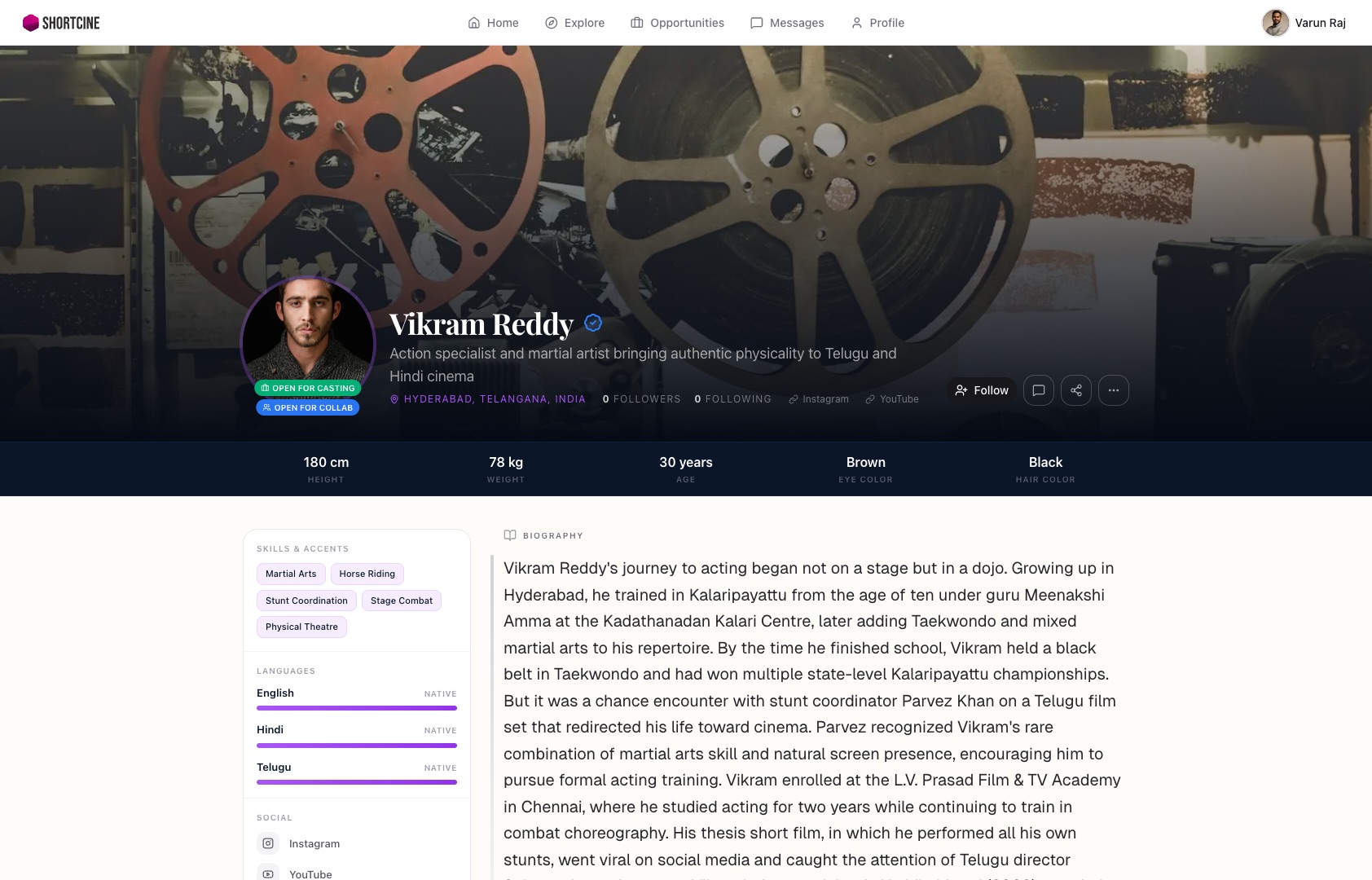
Then the details. Age, height, weight, build, languages. This is where a lot of actors lose out without knowing it. If the role is for a 22-year-old woman, 5'4", who speaks Hindi and Marathi, and your profile says nothing about your height or languages, you get skipped. Not because you weren't right for it, but because they couldn't tell, and they don't have time to ask.
A casting associate in Hyderabad said the most common reason she skips otherwise-decent profiles is missing basic information. "I need to know if they can speak Telugu. If it's not listed, I move on. I can't message every person to ask."
Then the reel. If the photo looked right and the details matched, they'll tap the reel. But they're not watching the whole thing. They watch fifteen to twenty seconds. If those seconds show someone who can act and looks comfortable on camera, they'll watch more. If those seconds are a title card, or a slow fade-in, or a scene where you're standing in the background, they stop.
This is why your strongest moment needs to be first. Not a buildup. Not context. The best thing you've done, right at the top.
What makes them skip
I asked each person: what makes you immediately pass on a submission? The answers overlapped a lot.
Bad photos. This came up every single time. Selfies, mirror photos, photos with other people cropped out (you can always tell), half the face in shadow, old photos that clearly don't match the person's current age. One associate said: "If I can't see your face clearly in the first photo, I don't look at the second one."
Missing information. No height. No age. No languages. No location. This is basic stuff and a surprising number of actors skip it. I think some people feel it's reductive to list their measurements like a product spec sheet, and honestly, I get it. But that's exactly what the screening stage requires. You're being matched to a character description. If the data isn't there, the match can't happen.
Reels that are too long. Anything over two minutes is a risk. Over three minutes and most people won't press play at all. An associate in Chennai told me: "If I see the reel is six minutes, I already know this person doesn't understand the process."
Obviously filtered or edited photos. Skin smoothing, face reshaping, heavy color grading. This is more common than you'd think. And it backfires completely. The associate knows the photo is edited. They also know that if they call you in, you won't look like the photo. That's a waste of everyone's time, and they won't take that risk.
What makes them stop and look closer
Natural, well-lit photos where the person looks like a real human. Sounds obvious, right? But in a stack of 400 overly posed, overly edited submissions, a simple photo taken in daylight with a clear face and a relaxed expression genuinely stands out.
A clean reel that starts strong. No intro graphics. No name cards. Just a scene that starts and an actor who's present in it. If the first scene is good, they'll keep watching. If there's a second scene that shows range, even better.
Credits they recognize. If you've been in a short film that did festival rounds, or a web series they've heard of, or worked with a director they know, that gets attention. It doesn't need to be a famous project. It just needs to be a real one. If someone can look it up and confirm other people in the industry have trusted you with a role, that counts for a lot.
A comp card. This is something most actors in India don't know about, but casting professionals love it. A comp card is a single image or PDF with your headshot, a couple of alternate looks, and all your key details: name, age, height, build, languages, contact info. It's the format used in international casting. In India, it's still rare enough that having one signals you know what you're doing.
Why Instagram doesn't work for submissions
Almost every associate I talked to brought this up without me asking. Actors send their Instagram profile as their portfolio. It doesn't work.
The reasons are practical. Instagram profiles mix personal content with professional content. The casting associate has to scroll through your vacation photos and food posts to maybe find an acting clip. The photos are cropped square. The video is vertical. There's no way to quickly find your height, age, or language info.
One associate put it bluntly: "When someone sends me their Instagram, I know they're not serious. A serious actor has a proper profile somewhere."
Instagram can help with visibility. If a casting director is curious about you after seeing your submission, they might check your Instagram. That's fine. But it's not a substitute for a real portfolio.
What this means for you
The screening process is not personal. At this stage, nobody's evaluating your talent or your potential or your journey as an artist. They're checking boxes. Can they see what you look like? Do you match the brief? Can they watch a few seconds of you acting?
If yes to all of that, you move forward. If anything is missing, you don't. It really is that mechanical.
The upside is that this is entirely in your control. Get proper photos. Fill in all your details. Cut a short, strong reel. Put it all in one place where someone can find it in thirty seconds. Not glamorous advice, but it's what actually gets you into audition rooms.
Your career deserves a better home than a WhatsApp group.
Stop sending PDFs and bulky video files. One professional link for your entire portfolio.