Guide
How Actors Can Network at Film Festivals Without an Exclusive VIP Pass
The useful part of a film festival is not the party you cannot get into. Here is how actors build real industry relationships at festivals on a delegate badge and a small budget.
Every actor who has stood outside a festival venue watching people with better lanyards walk past has had the same thought: the real thing is happening in there, and I am out here.
Mostly, it is not. The exclusive party is where people who already know each other drink together. The useful part of a festival, for an actor with no credits and no invitation, happens in daylight, in queues, in Q and As and in half-empty screening rooms, and it is entirely accessible on the cheapest badge available.
Here is how to work one properly.
Reset what you are actually there for
You are not there to be discovered. Nobody is going to watch you in a lobby and cast you.
You are there to become a person that a handful of filmmakers recognise. That is the whole objective, and it is achievable in three days. Recognition compounds: the director who has met you twice, seen your face at their screening and had one real conversation with you is a person who will open your email in a year. Somebody who has never met you will not.
So the metric for a good festival is not business cards collected. It is three to five genuine conversations with people making work you would want to be in, plus a follow-up that lands.
Go where the filmmakers actually are
The party requires an invitation. These do not.
Screenings of small films, especially early in the day. A first feature at eleven in the morning has an anxious director, a producer, sometimes a couple of cast members, and forty people in the audience. The director is desperate for anyone to have watched their film and thought about it. This is the single most under-exploited access point at any festival.
The Q and A afterward, and the ten minutes after that. The Q and A itself is a performance. The conversation in the aisle immediately after it is the real one, and most of the audience has already left.
Panels, masterclasses and industry talks. Free or included with most delegate badges, full of working professionals, and the queue to get in is a conversation with someone who chose the same session as you for the same reason.
Volunteer and crew shifts. Volunteering at a festival gets you inside every venue, gives you a legitimate reason to speak to everyone, and puts you in a team with other film people for a week. For an actor at the start, this is often better than a delegate badge.
Short film blocks. The directors of short films are the people who will be making features in five years, they cast unknown actors now, and almost nobody networks with them because they are not yet important.
The coffee queue, the smoking area and the shuttle bus. Unglamorous, and where a large share of festival conversation actually happens.
How to have the conversation
The reason most festival networking fails is that people try to sell. Do not sell.
Lead with the work, specifically. "I saw your film this morning. The scene in the kitchen, where she does not answer him, I have not stopped thinking about it." That is it. It is true, it is specific, and it identifies you as someone who watched rather than someone who wants something. Vague praise reads as a transaction. One precise detail reads as attention, and attention is rare and disarming.
Ask a real question and then listen. How long was the edit. Where did they find the lead. How they got it financed. Filmmakers talk about their films happily and almost nobody asks them anything after the first day.
Answer the "what do you do" question in one clean sentence. "I am an actor, mostly theatre, I have been doing self-tapes for series work this year." Not a pitch, not a monologue, not an apology. Warm, brief, and then back to them.
Do not ask for anything in the first conversation. No showreel link, no request to be considered, no "please keep me in mind". It converts a human interaction into a transaction and it is the reason people avoid actors at festivals.
Leave before it goes flat. Ten good minutes and a clean exit is far better than forty minutes where they are looking for an escape. End it yourself and you leave a good impression rather than a long one.
What to actually leave behind
A card is fine, and increasingly nobody uses them. What works better is the thing you can do in five seconds on a phone: connect on the platform they actually use, usually Instagram, so the contact survives the loss of a piece of paper.
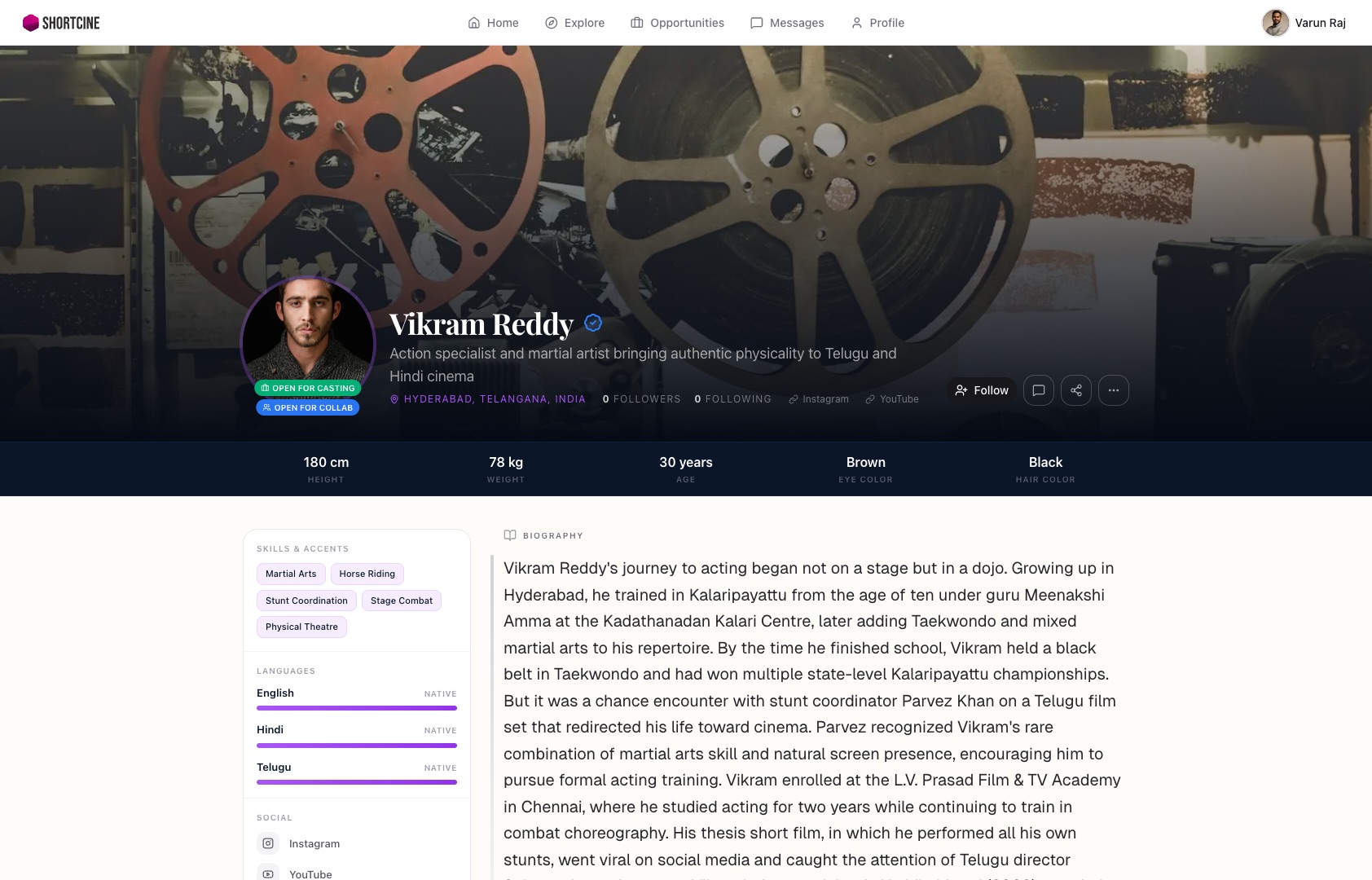
Have your profile ready before the festival, because they will look. That means a current headshot, a bio that says what you do and where you are, and either a pinned reel or a link to your casting profile. If a director looks you up that evening and finds a private account with no information, the entire conversation evaporates.
The follow-up is where it actually happens
Almost nobody does this, which is why it works.
Within two or three days, send one short message. Reference the specific thing you talked about, so they remember which person you were. Say one true sentence about their film. Do not attach anything, do not ask for anything, do not mention casting.
That is the whole message. What it does is convert a face into a name in their phone, at no cost to them, with no obligation attached. Then leave it alone. Watch their work, respond occasionally to what they post, and be a real presence rather than a periodic request.
When something genuinely relevant comes up, six months or a year later, you are not a stranger asking for a favour. You are someone they know.
Practical festival economics
You do not need the expensive pass. Compare what the tiers actually give you, and in most cases the cheapest delegate badge gets you into screenings, panels and public industry sessions, which is where the accessible people are.
Volunteer if the budget is tight, because it is free access plus a reason to talk to everyone.
Go local first. Regional and city festivals have a far better ratio of accessible filmmakers to attendees than the big international ones, and the people you meet are making work you can realistically be cast in.
Go for fewer days and work them properly. Three focused days beats a week of drifting.
And skip the parties without guilt. The five people you actually want to know were at the eleven o'clock screening, and they will be at another one tomorrow.
What not to do
Do not hand out headshots unsolicited. Do not pitch yourself to a casting director in a queue for the bathroom, since they are at work and being ambushed is exactly why they avoid actors at festivals. Do not photograph people without asking. Do not tell a director you would be perfect for their next film. Do not treat volunteers or junior staff as unimportant, because they are the ones who will be running things shortly and everyone notices how you speak to them. And do not measure the trip by whether anything happened, because nothing happens at festivals. Things happen months later, because of festivals.
Frequently asked questions about networking at film festivals
Do actors need an expensive pass to network at a festival? No. Screenings, Q and As, panels and public industry sessions are where accessible filmmakers actually are, and a basic delegate badge or a volunteer role covers all of them.
Who should an actor try to meet at a festival? Short film and first feature directors, producers of small films, and other actors. They cast unknown people, they are approachable, and they are the industry in five years.
How do you start a conversation with a director? Reference one specific moment from their film honestly, ask a real question about how they made it, and do not ask for anything in that first conversation.
Should I bring headshots or a showreel to a festival? Bring a current, public online profile instead. Unsolicited physical headshots are rarely useful and can read as pushy.
When should I follow up? Within two or three days, with a short message referencing your actual conversation, containing no attachments and no requests.
Your career deserves a better home than a WhatsApp group.
Stop sending PDFs and bulky video files. One professional link for your entire portfolio.