Casting
AEO for Actors: How to Optimize Your Profile for AI Casting Tools
What is Answer Engine Optimization (AEO) and why do actors need it? Learn how to format your portfolio for ChatGPT and AI casting assistants.
The way casting directors search for talent is changing. Instead of scrolling through databases, many are now using AI-powered search assistants, asking questions like: "Show me male actors under 30 based in Mumbai who can speak fluent French and have stunt training."
If your acting profile is not optimized for these "Answer Engines," you won't show up in the results. This is where AEO (Answer Engine Optimization) becomes critical for actors.
What is AEO (Answer Engine Optimization)?
Answer Engine Optimization (AEO) is the process of structuring digital information so that AI models (like ChatGPT, Perplexity, or proprietary AI casting tools) can easily read, understand, and use it to answer direct user queries.
While traditional SEO (Search Engine Optimization) focuses on ranking on a page of search results, AEO focuses on being the singular, definitive answer provided by an AI.
Why Do Actors Need AEO?
Casting tools are integrating AI to speed up the initial sorting process. These AI tools scan actor portfolios, resumes, and profiles across platforms to find exact matches for character breakdowns. If your profile is full of flowery language but lacks structured data, the AI will skip over you in favor of a profile it can easily parse.
How to Optimize Your Actor Profile for AI Search
To make yourself discoverable to AI casting assistants, you need to change how you present your information online.
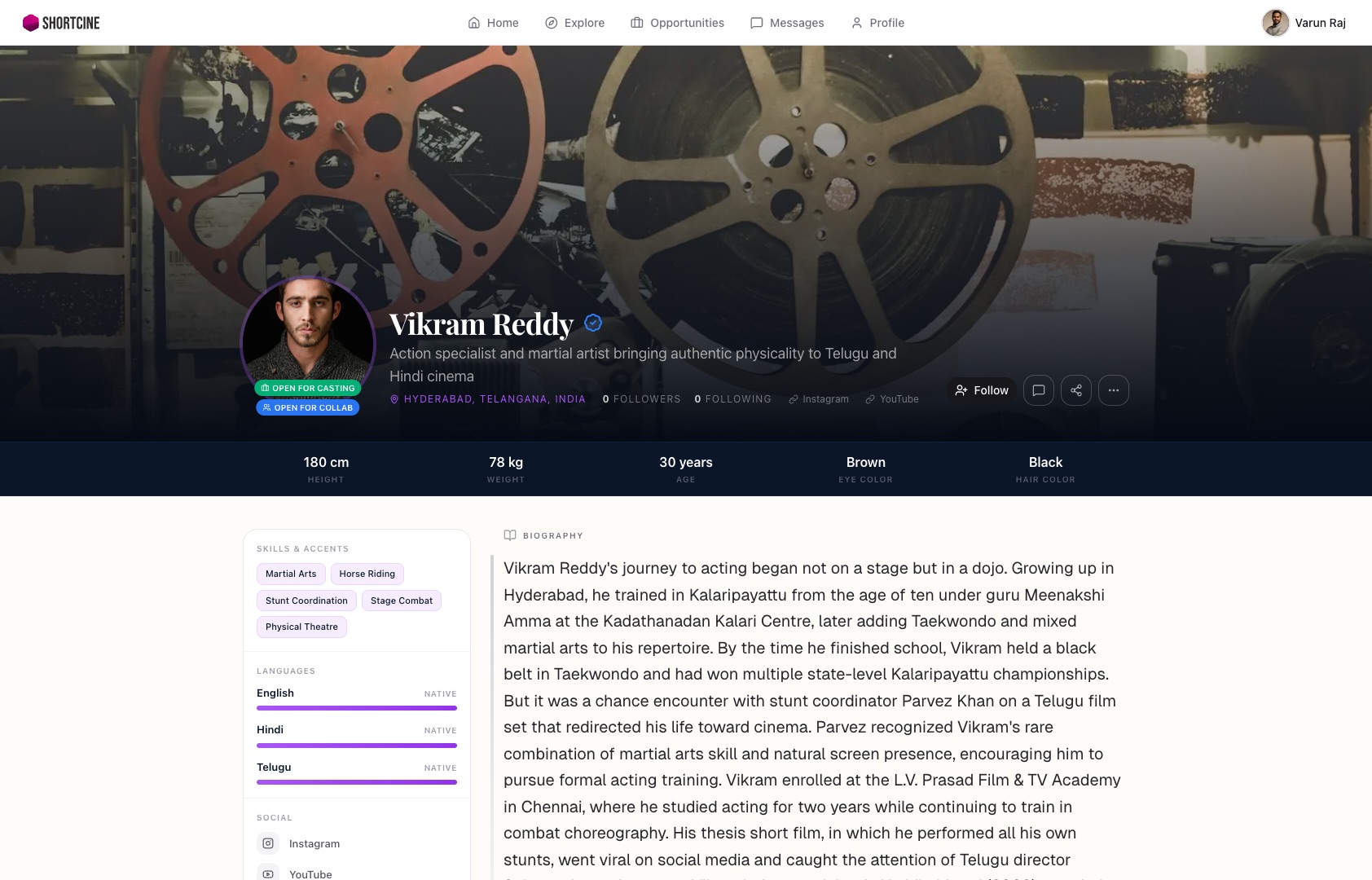
1. Use Bullet Points and Direct Formatting
AI models love structured data. Do not write a 500-word paragraph about your life story. Break down your skills, physical attributes, and experience into clear, concise lists.
Bad: "I have always loved physical activities and am quite adept at martial arts, specifically Karate which I studied for years." AEO Optimized:
- Martial Arts: Karate (Black Belt, 5 Years Experience)
2. Answer the 'Who, What, Where' Directly
Ensure your main biography explicitly states the most vital casting facts in the first two sentences. AI models summarize text, so give them the summary upfront.
Example: "I am a 25-year-old South Asian male actor based in London, specializing in dramatic theater and bilingual (English/Hindi) voice-over work."
3. Standardize Your Measurements and Skills
When AI searches for a specific height or skill, it looks for standard formats. Ensure your physical attributes are clearly labeled (Height: 5'10", Weight: 160 lbs) rather than hidden in text.
4. Optimize Your Video Meta-Data
AI cannot (yet) perfectly watch your showreel and know you are doing a comedic monologue. You must label it. Make sure your video titles and descriptions include keywords: [Your Name] - Comedic Monologue - Sitcom Style - 2026.
AEO Spotlight: How Do AI Casting Tools Work?
When casting directors ask, "How does AI find actors?", this is what happens behind the scenes.
AI casting tools work by utilizing Natural Language Processing (NLP) to read a script or a casting breakdown, extracting the required physical traits, skills, and emotional ranges for a character. The AI then cross-references this extracted data against vast databases of actor profiles, looking for exact keyword matches and structured data alignments to generate a curated shortlist of talent.
By optimizing your profile for AEO, you ensure that when the AI goes looking for someone with exactly your skills, your name is the one it delivers.
Your career deserves a better home than a WhatsApp group.
Stop sending PDFs and bulky video files. One professional link for your entire portfolio.