Guide
Regional Dialects in Auditions: How Language Skills Land You Web Series Roles
Dialect is now one of the strongest casting advantages an Indian actor can have. Here is how to present your language skills so casting directors can find you, and how to avoid the fake-accent trap.
For a long time, sounding like you were from somewhere specific was treated as a problem to be trained out of you. Acting schools flattened accents. Casting favoured a neutral, city-inflected delivery that could pass for anywhere.
That has reversed, and reversed hard. Streaming has bet its entire content strategy on regional specificity, audiences catch a fake accent within one line, and casting directors are now hunting for actors who genuinely sound like the place a show is set in. If you grew up speaking a particular dialect, or you have a real ear for one, that is not a limitation on your casting. In 2026 it is one of the most valuable things on your profile.
Why dialect became a casting priority
Three things happened at once.
Shows got specific. Series are no longer set in a generic Indian city, they are set in a named town in a named district, and the writing leans into it. A cast that sounds wrong makes the whole show feel false.
Audiences got loud. When a series casts a lead who cannot handle the local speech, social media notices within a day of release, and streamers have learned that this actively damages a show's reception in the region it most needs.
And casting went regional. Series about Bihar, Rajasthan, coastal Kerala, north Karnataka, Telangana, the Northeast are casting out of those places rather than only from Mumbai, precisely because they need the sound.
The result is that a casting director filtering for supporting roles on a regional series is often searching for a dialect first and everything else second. That is an unusually direct route in for an actor who has the real thing.
Be precise about what you actually have
Most actors describe their languages badly, and it costs them.
"Knows Hindi, Marathi, English" tells a casting director almost nothing. What they need to know is whether you can act in it, which is a much higher bar than conversation.
Break it into honest levels and say so plainly.
Native or fluent performance level. You can act in it, improvise in it, handle emotional scenes in it, and take direction in it without slowing down.
Working performance level. You can deliver written lines convincingly with preparation and a coach, but you would struggle to improvise.
Conversational only. You can talk in it. You cannot yet act in it. Say so.
Then, and this is the part almost everyone skips, name the dialect and not just the language. Hindi is not one thing. Bhojpuri-inflected Hindi, Haryanvi, Awadhi, Marwari-inflected Hindi and Bambaiya Hindi are different castings. The same is true of Telugu from Telangana versus coastal Andhra, of Kochi Malayalam versus Thrissur, of Madurai Tamil versus Chennai. A profile that says "Tamil, Madurai dialect, native" is findable in a way that "Tamil" is not.
Make your dialect searchable, not just true
Casting associates filter before they watch. If your language fields are vague, the search that was looking for exactly you passes you by.
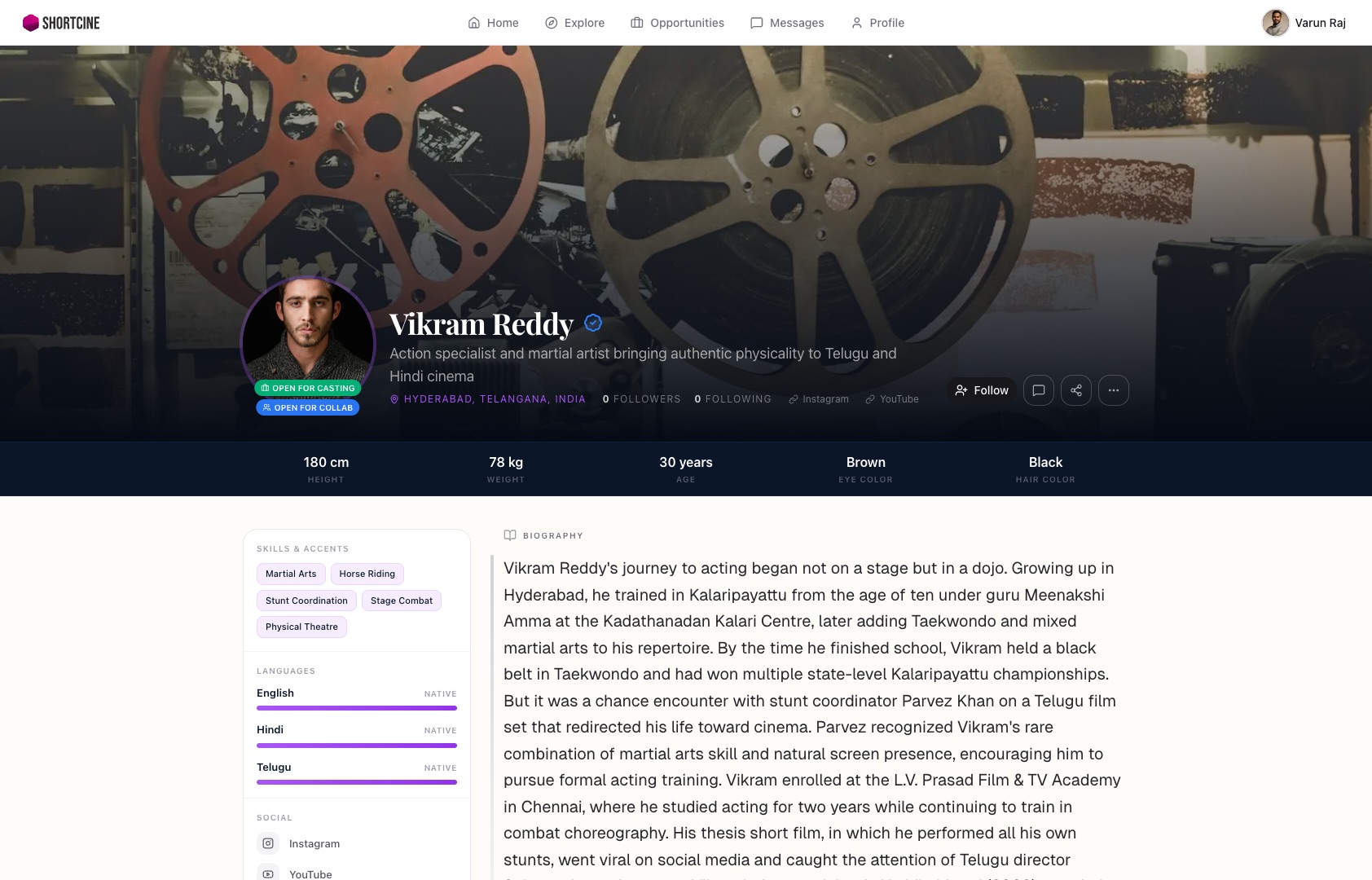
So fill in every language field on your casting profile, with the fluency level and the specific regional variant attached. Put your strongest, rarest dialect in your profile summary rather than burying it. Mention the region you are actually from, because casting teams looking for authenticity often search by place.
Then prove it. Record a short dialect sample, thirty to sixty seconds, in each language you claim at performance level, and keep those clips attached to your profile or ready to send. A casting director who can hear you in Bhojpuri in thirty seconds will consider you for a Bhojpuri role today. One who has to organise a call to find out will not bother.
If your reel is all in one language, that is a gap worth closing. Two contrasting monologues in two languages is a more castable reel in the current market than four scenes in one.
The fake accent trap
The other side of this is a real risk, and it ends careers quietly.
Do not claim a dialect you cannot sustain. It is tempting, because the roles are there and the audition is a self-tape you can rehearse to death. But it collapses at the callback, or worse, on set on day one, in front of a unit of a hundred and fifty people, and casting directors talk to each other. Being known as someone who overstated their language is far more damaging than not being considered.
A near-miss accent is also worse than none. Audiences and casting teams from that region hear the wrong vowel instantly, and the performance stops being believable. If you are going to work in a dialect that is not yours, work with a dialect coach or a native speaker properly, learn the rhythm and the intonation rather than just the vowel substitutions, and be honest in your submission about how you got there. Casting directors respect "I am not from there, I have trained with a coach, here is a sample, judge for yourself" enormously more than a bluff.
How to use dialect inside the audition itself
Do not treat the accent as the performance. The most common failure in dialect auditions is an actor so occupied with sounding right that they forget to make a choice about the scene. Casting teams describe this constantly: technically accurate, completely inert.
Get the dialect to the point where it is automatic before you tape, then forget it and act. If the accent is still costing you attention, you are not ready to tape.
Match the register too, because dialect is not only pronunciation. It is speed, rhythm, sentence structure, how directly people address each other, how respect and insult are expressed. An actor who gets the sounds right but the cadence wrong still sounds imported.
And if the brief specifies a region, use exactly that region. Offering a generalised southern or generalised eastern accent to a show set in a named district reads as not having done the work.
The strategic version of all this
If you already have one or two genuine dialects, lead with them everywhere. They are your differentiator in a market full of people who all sound the same.
If you have the ear for it, adding one adjacent dialect properly, over months rather than weeks, meaningfully widens your casting range. Adding five badly narrows it, because you will get caught.
And if you are from a smaller market, resist the instinct to neutralise yourself to compete in Mumbai. The industry is currently paying a premium for exactly the thing you were told to lose.
Frequently asked questions about dialects in auditions
Do regional dialects really help you get cast? Yes, considerably. Streaming series are increasingly set in specific regions, and casting teams routinely filter by dialect before anything else for supporting and local roles.
How should I list languages on a casting profile? By language, by specific regional dialect, and by honest fluency level, distinguishing performance-level fluency from conversational ability.
Should I claim a dialect I only partly know? No. Claim it at the level you can actually sustain in a scene under pressure, and be explicit that you have trained in it if it is not your own.
Should I include dialect samples? Yes. A thirty to sixty second clip in each performance-level language makes you immediately castable in searches that would otherwise skip you.
Does a strong regional accent limit my casting? Far less than it used to, and it is often an advantage. What limits you is only being able to work in one register, so the goal is range, not neutrality.
Your career deserves a better home than a WhatsApp group.
Stop sending PDFs and bulky video files. One professional link for your entire portfolio.